
November is a quieter month for beekeepers in the San Francisco Bay Area. As temperatures begin to drop and the rainy season approaches, our priority shifts from managing colonies to protecting them from moisture and keeping them healthy through winter.
Varroa Treatments and Feeding Are Normally Complete
By November, the main fall beekeeping tasks should already be finished.
- Varroa treatments: Fall treatments should normally be completed in October, helping colonies enter winter with low mite levels.
- Feeding: Any necessary supplemental feeding should also be finished. Colonies should have sufficient honey and pollen reserves for the coming weeks.
- Colony strength: Healthy colonies with good populations and adequate food stores are better prepared for cooler, wetter weather.
In our mild California climate, queens generally continue laying eggs during the fall, although brood production slows as days become shorter and pollen availability decreases.
Preparing Beehives for the Rainy Season
November usually marks the beginning of the rainy season in the Bay Area.
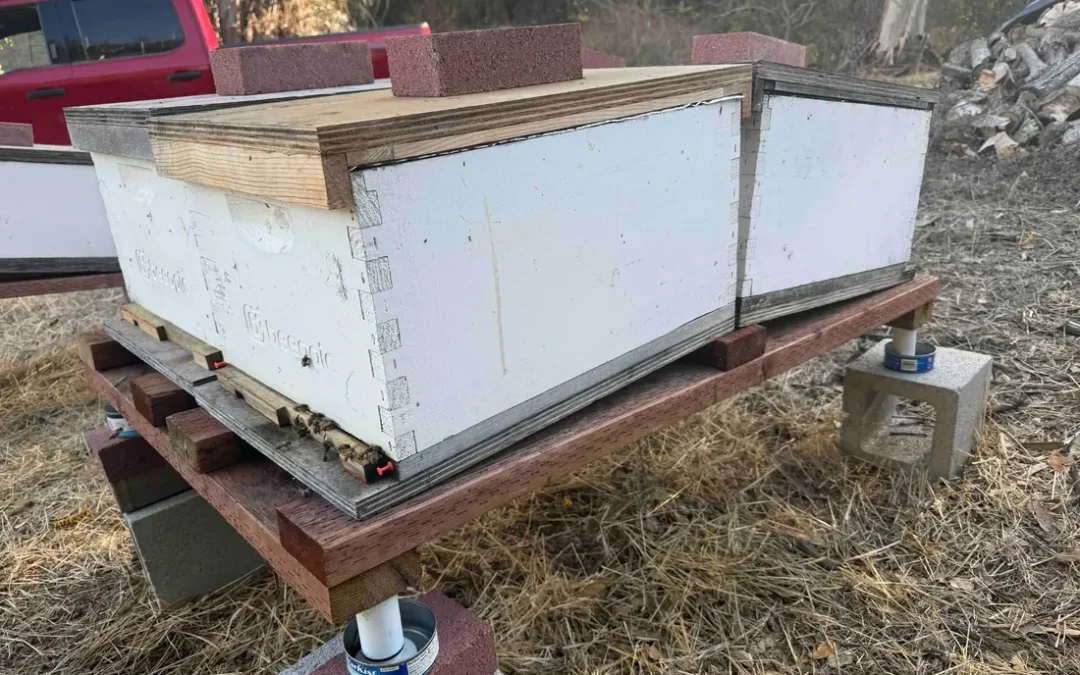
One simple practice I follow at Beeopic California is to tilt my beehives slightly forward.
This small adjustment helps rainwater and condensation that reach the bottom board drain toward the entrance instead of accumulating inside the hive.
Excess moisture can be a greater winter challenge than cold temperatures, particularly in our relatively mild climate.
My hives are equipped with solid bottom boards and are raised above the ground on wooden stands.
I also use a simple system with oil-filled containers under the stand legs to prevent Argentine ants from reaching the colonies.
Keep the Hives Dry and Protected
During November, I focus on a few essential precautions:
- Keep hive covers secure and watertight.
- Tilt hives slightly forward to encourage drainage.
- Make sure entrances remain clear.
- Keep hives elevated above wet ground.
- Avoid unnecessary inspections during cold or rainy weather.
Good ventilation and moisture management are important, but that doesn’t mean leaving hives exposed to cold drafts.
Let the Bees Do Their Work
November is also a good time to leave the colonies undisturbed.
In the San Francisco Bay Area, our bees don’t experience the same long winter brood break found in colder climates. Brood production usually slows in the fall and can increase again in December or January as winter rains encourage fresh vegetation and pollen availability.
For now, the best approach is simple: keep the hives dry, monitor them from the outside, and let the bees prepare for the coming season.
At Beeopic California, we believe that successful winter beekeeping is often about doing less, but doing the right things at the right time.
Happy beekeeping!
Beeopic California — Local Beekeeping Since 2016