Create a Beautiful Garden That Supports Honey Bees All Year Long
Did you know that choosing the right plants can make a real difference for honey bees and other pollinators?
In Sonoma, Napa, and throughout the San Francisco Bay Area, our Mediterranean climate offers excellent opportunities to create bee-friendly landscapes.
With mild, rainy winters and warm, dry summers, the key is to select plants that provide nectar and pollen during different seasons.
At Beeopic California, we’ve been working with honey bees in California since 2016. One of the questions we frequently hear from property owners is:
“What should I plant to help my bees?”
Here are our recommendations.
1. California Native Plants: The Best Place to Start
Native plants are particularly valuable because they are adapted to local conditions and support both honey bees and native pollinators.
California Lilac (Ceanothus)
Blooming: February–May
One of the best early-season plants for bees. Its beautiful blue flowers provide nectar and pollen when colonies are expanding rapidly in spring.
Manzanita (Arctostaphylos)
Blooming: December–April
An excellent winter and early-spring nectar source. Manzanita is particularly valuable because it flowers when relatively few other plants are blooming.
California Poppy (Eschscholzia californica)
Blooming: February–June
California’s iconic wildflower provides pollen for bees and adds beautiful orange flowers to your landscape.
California Buckwheat (Eriogonum fasciculatum)
Blooming: May–October
One of our favorite plants for the Bay Area! Its flowers attract numerous pollinators during the dry summer months.
Once established, California buckwheat is highly drought-tolerant.
Coyote Brush (Baccharis pilularis)
Blooming: August–November
An important late-season resource for bees. Its flowers provide pollen and nectar when many spring and summer plants have finished blooming.
California Sage (Salvia species)
Blooming: March–July
California native sages are drought-tolerant and produce flowers that attract honey bees, native bees, and hummingbirds.
2. Mediterranean Plants: Excellent for Honey Bees
Many Mediterranean herbs thrive in Sonoma and Napa because their native climate is similar to ours.
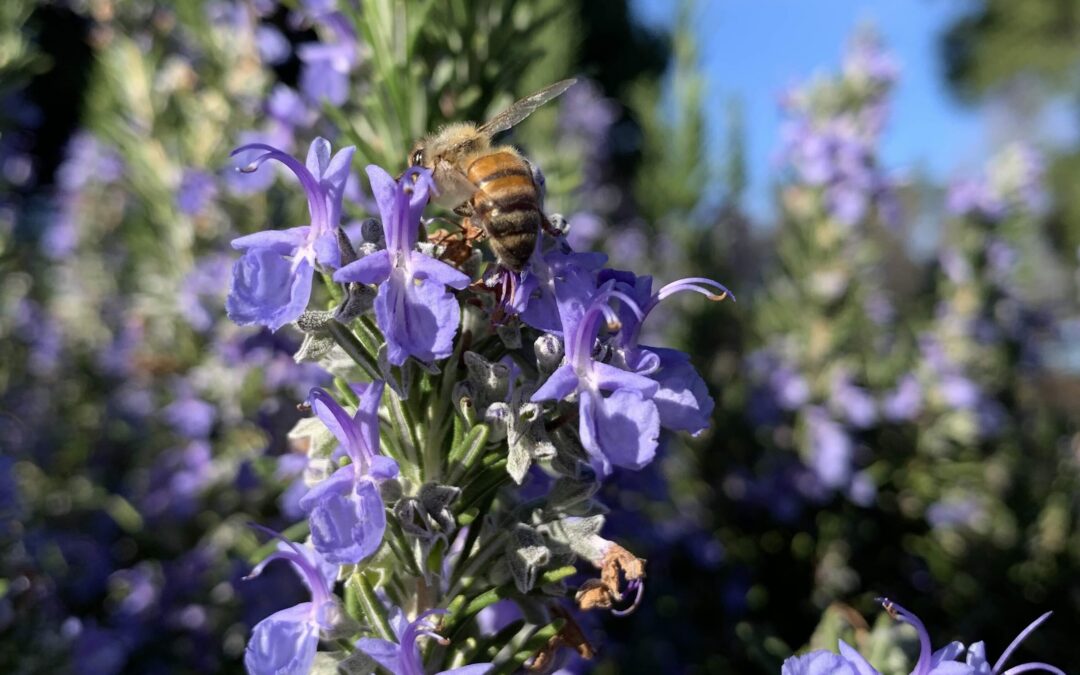
Rosemary (Salvia rosmarinus)
Blooming: Winter–Spring
Rosemary is one of the most useful garden plants for honey bees. Its flowers can provide nectar during winter and early spring.
Lavender (Lavandula species)
Blooming: May–September
Lavender is highly attractive to honey bees and thrives in sunny locations with well-drained soil.
Thyme (Thymus vulgaris)
Blooming: May–July
A small aromatic herb that produces nectar-rich flowers.
Oregano (Origanum vulgare)
Blooming: June–September
When allowed to flower, oregano attracts large numbers of honey bees and other pollinators.
Borage (Borago officinalis)
Blooming: Spring–Fall, depending on moisture
Borage produces beautiful blue flowers and is an excellent nectar source. It may need supplemental water during California’s dry summers.
3. Plan Your Garden for Year-Round Flowering
The most important consideration isn’t just which plants you choose, but when they bloom.
Here’s a simple planting strategy for Sonoma, Napa, and the Bay Area.
| Season | Recommended Plants |
|---|---|
| Winter (December–February) | Manzanita, Rosemary |
| Early Spring (March–April) | California Lilac, California Poppy, Sage |
| Late Spring (May–June) | California Buckwheat, Thyme, Lavender |
| Summer (July–August) | Lavender, Oregano, California Buckwheat |
| Fall (September–November) | Coyote Brush, California Buckwheat |
Flowering periods vary depending on location, rainfall, temperature, and irrigation.
4. Five Simple Tips for a Bee-Friendly Garden
1. Plant flowers in groups
Honey bees are more likely to visit large patches of the same flowering plant than isolated flowers scattered throughout a garden.
2. Choose drought-tolerant plants
California native plants and Mediterranean herbs generally require less water once established.
3. Avoid pesticides
Avoid using insecticides on flowering plants, particularly when bees are actively foraging.
4. Provide a water source
Bees need water, especially during hot summer days. A shallow container with stones or floating landing surfaces can help them drink safely.
5. Leave some natural vegetation
Not every area needs to be perfectly landscaped. Natural vegetation can provide valuable food and habitat for native pollinators.
5. Our Top Six Plants for Bay Area
If we had to recommend just six plants for a property in Sonoma or Napa, we would choose:
- Manzanita – Winter nectar
- California Lilac – Early spring nectar and pollen
- Rosemary – Winter and spring nectar
- Lavender – Summer nectar
- California Buckwheat – Summer and early fall nectar
- Coyote Brush – Fall pollen and nectar
Together, these plants can provide flowering resources across much of the year while creating a beautiful, relatively low-maintenance landscape.
For native plants, choose species and varieties appropriate to your property’s soil, exposure, and local habitat. Local native plant nurseries can help with selection.
6. Thinking About Installing Beehives on Your Property?
Planting bee-friendly flowers is a great first step, but honey bees don’t depend exclusively on the flowers in your garden.
A honey bee colony can forage several miles from its hive, collecting nectar and pollen from trees, wildflowers, gardens, and agricultural landscapes.
At Beeopic California, we help homeowners, farms, vineyards, and businesses establish and maintain healthy honey bee colonies.
Our services include:
- Beehive installation
- Professional beehive maintenance
- Honey harvesting
- Local honey production
- Advice on creating bee-friendly landscapes
Whether you have a small garden, a vineyard, or a large property, we can help you develop a beekeeping project adapted to your environment.
Bring Bees to Your Property
Interested in having beehives on your property in Sonoma, Napa, or the San Francisco Bay Area?
Contact Beeopic California to learn more about our beehive installation and maintenance services.
Beeopic California — Local Beekeeping Since 2016