
Honey bees are famous for their buzzing, but can bees actually “sing”?
Bees do not sing like birds, but they produce sounds and vibrations that play an important role in communication inside the colony. One of the most fascinating examples is the distinctive sound produced by queen bees, commonly called queen piping.
Beekeepers can sometimes hear this high-pitched sound directly from a hive, especially during the swarming season when virgin queens are present.
What Is Queen Bee Piping?
Queen piping is a series of sounds and vibrations produced by queen bees and transmitted through the comb.
A free virgin queen can produce a characteristic signal often described as “tooting.” Queens that are still inside their queen cells may respond with shorter signals known as “quacking.”
Together, these signals allow queens and the colony to exchange information during a critical stage of queen replacement and swarming.
Why Do Queen Bees Make These Sounds?
Queen piping is particularly associated with colonies containing multiple developing queens.
After the first virgin queen emerges, other queens may still be developing inside capped queen cells.
The emerged queen can produce piping signals, while queens remaining inside their cells may respond.
These vibrations appear to play a role in coordinating queen emergence and colony behavior during the swarming process.
How Do Bees Hear Queen Piping?
Honey bees do not hear sounds exactly as humans do.
Instead, they are extremely sensitive to vibrations transmitted through the wax comb and to movements of air.
Bees can detect these vibrations through specialized sensory structures, including receptors in their legs and antennae.
This makes the honeycomb itself an important communication network inside the colony.
Do Worker Bees Make Sounds Too?
Yes.
Queen piping is particularly distinctive, but queens are not the only bees that produce vibrations and acoustic signals.
Worker bees also generate vibrations during different behaviors and forms of communication.
The colony is therefore a surprisingly complex acoustic environment, even though many of these signals are difficult for humans to hear without specialized equipment.
Can a Beekeeper Hear a Queen Bee Piping?
Yes, sometimes.
During the swarming season, an experienced beekeeper may hear the characteristic piping of a virgin queen simply by listening carefully near the hive.
Hearing queen piping can be an indication that the colony is in a period of queen replacement or swarming activity.
For me, it is one of the most fascinating sounds you can hear in a beehive.
Listen to a Queen Bee Piping
The sound is much easier to understand once you have actually heard it.
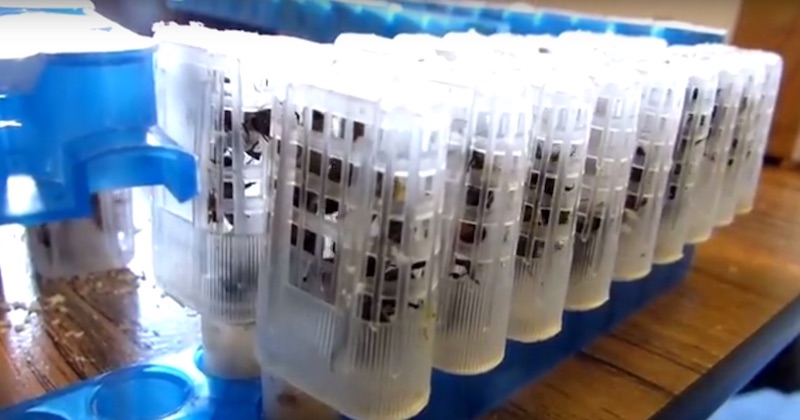
In the video below, you can listen to the distinctive piping sound produced by a queen bee.