
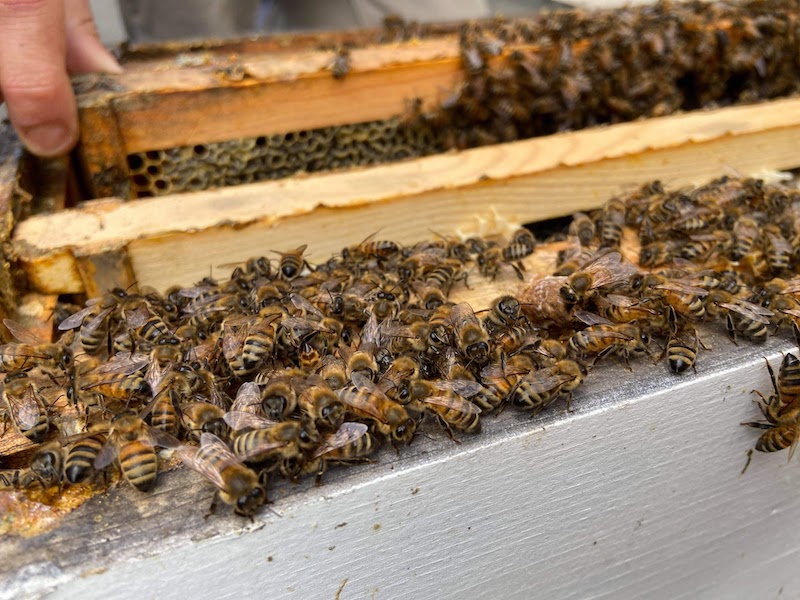
A honey bee colony can grow surprisingly fast in spring. When temperatures rise, pollen and nectar become available, and the queen increases egg laying, a colony can expand from a relatively small winter population to tens of thousands of bees within a few weeks.
A strong queen can lay 1,500 to 2,000 eggs per day or more during favorable conditions. However, because a worker bee takes about 21 days to develop from egg to adult, colony growth is not immediate.
How Quickly Can a Bee Colony Grow?
During strong spring conditions, a healthy colony can increase its population dramatically over 4 to 8 weeks.
The exact speed depends on several factors:
- the strength and genetics of the queen;
- the amount of pollen and nectar available;
- temperature and weather;
- the amount of brood already present;
- available comb and space;
- Varroa mite levels and overall colony health.
This is why two colonies located in the same apiary can develop at very different speeds.
How Fast Can Bees Build a Hive?
When nectar is abundant and the colony is strong, bees can draw new comb very quickly.
But bees do not build comb simply because empty frames are available. Comb production requires a strong population, warm conditions and sufficient incoming food.
During a good nectar flow, a strong colony may draw several frames of foundation in a relatively short period. A weaker colony may take considerably longer.
Give the Colony Space as It Grows
Rapid spring development means the beekeeper must anticipate the colony’s need for additional space.
When nights are still cool, I prefer to expand the brood area progressively rather than creating too much empty space at once.
A new frame can be placed at the edge of the brood nest. Once the bees have drawn the comb and the queen begins laying in it, another frame can be added as the colony continues to expand.
As temperatures become warmer and the colony becomes stronger, expansion can become more aggressive.
Why Spring Colony Growth Matters
A rapidly growing colony can become very strong—but it can also become crowded.
If the brood nest becomes congested and the colony does not have enough space, swarming becomes much more likely.
Regular spring inspections therefore help the beekeeper balance two objectives: allowing the colony to expand while avoiding excessive congestion.
Replace Old Comb Gradually
Spring growth is also a good opportunity to begin replacing old, dark brood comb.
Rather than replacing many frames at once, I prefer gradual replacement as the colony expands. Over time, this keeps newer comb in the brood nest without disrupting colony development.
Replacing approximately one-third of the oldest comb each year is a practical approach for maintaining a regular comb-renewal cycle.